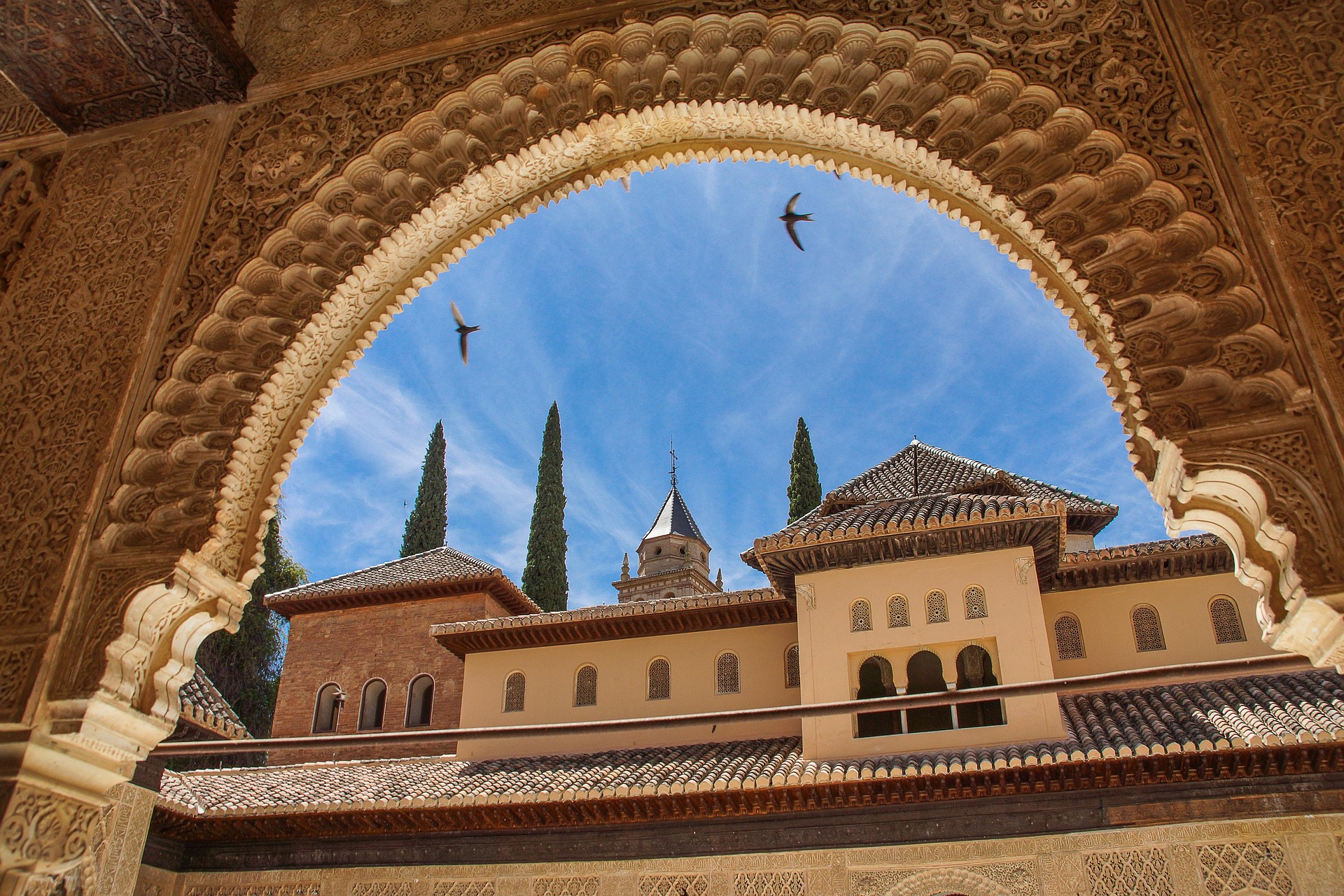
Centuries ago, if one walked through the streets of Baghdad or the avenues of Cordoba, the air itself seemed to hum with curiosity. In the courtyards of the Bayt al Hikmah, the House of Wisdom, scholars sat shoulder to shoulder beneath the glow of oil lamps, reading, debating, and translating. Paper, once a rare material introduced from China, passed from hand to hand as mathematicians, physicians, astronomers, and poets worked late into the night. Knowledge was not viewed as mere information. It was devotion. Each discovery, whether in medicine, mathematics, or the movement of the stars, was understood as a step toward comprehending the vastness of creation.
Knowledge during this period was communal rather than proprietary. It emerged through collaboration. Muslim patrons in Baghdad supported Christian translators who preserved Greek philosophy by translation from Greek into Arabic, while Jewish scholars in Muslim Spain carried Arabic manuscripts into Europe and translated them into Latin. Intellectual progress moved across cultures and languages, shaped by exchange rather than isolation. Each civilisation built upon the work of others, just as each thinker builds upon those who came before.
Today, however, if one were to walk through cities such as Damascus, Dhaka, or Djibouti and ask a child what they hope to become, the answers often reflect a familiar set of professions that societies associate with stability and success. These careers are important and form the backbone of any functioning society. Yet something has gradually shifted. The excitement of discovery, the desire to ask why and how, and the communal reverence once attached to scholarship have diminished. Research and academia are increasingly perceived as distant pursuits, often viewed as Western in origin and Western in purpose, and therefore disconnected from everyday realities. This perception is understandable, but it overlooks a deeper history. Many foundations of global science, philosophy, and mathematics were developed in Muslim societies, even if their significance is no longer widely remembered.
Understanding how this shift occurred requires looking carefully at history. For long periods, large parts of the Muslim world experienced European colonial rule. Colonisation reshaped political and economic systems, but it also altered how knowledge and education were organised and valued. Existing institutions were disrupted, and new models of schooling were introduced that often prioritised external standards over local intellectual traditions. In many places, children grew up learning that progress and authority were located elsewhere, rather than within their own histories and communities.
Figures such as Thomas Babington Macaulay expressed views that elevated European literature and thought while dismissing local traditions. These ideas influenced educational policies that emphasised imitation over independent inquiry. Over time, this affected how generations perceived their own intellectual heritage and capacity. The impact was not uniform across regions, but it left lasting impressions on confidence, language, and approaches to learning.
These changes unfolded alongside profound social disruptions. Languages lost prominence, systems of knowledge transmission weakened, and the continuity of scholarly traditions was interrupted. In some contexts, the pursuit of science or scholarship came to feel distant from daily survival, especially where communities faced economic hardship or political instability. When basic needs dominate attention, sustained research and inquiry often become secondary concerns.
When independence movements eventually succeeded, they brought both hope and complexity. Newly formed nation-states inherited administrative and educational frameworks shaped during earlier periods, often adapted rather than entirely rebuilt. Societies across the Muslim world faced the challenge of balancing inherited systems with local identities and aspirations. Questions about how to cultivate education, research, and scholarship in ways that resonate with local cultures remain open and evolving.
For many communities, the legacy of earlier disruptions continues to shape priorities today. In environments where stability itself requires constant effort, long-term investment in academic research can feel out of reach. This reality does not reflect a lack of intellectual capacity or curiosity, but rather the conditions under which many societies are operating.
As someone who grew up in Pakistan, even as a third-generation citizen, these dynamics are not abstract. They are visible in institutions, public memory, and the expectations that quietly shape what young people believe is possible. They influence how communities imagine their futures and what paths feel attainable. Yet this context also sharpens an increasingly important question. Given this history and the present moment, how should the future be shaped?
Today, there are nearly two billion Muslims across roughly fifty Muslim majority nations. This is not a marginal population. It is a vast, diverse, and interconnected civilisation, still in the process of defining how knowledge, scholarship, and inquiry fit into its collective future.
When I joined the University of Toronto as an undergraduate a few years ago, I gradually became aware of something that unsettled me. There were no Muslim professors in my department. At first, I thought this might be a coincidence. But as I asked around and looked beyond my major, I realized this was not just an issue within neuroscience or limited to my campus. It was part of a broader global pattern. There were relatively very few Muslims pursuing careers in academia and research.
The reasons behind this are numerous and complex, often tied to historical and structural realities as discussed earlier. But one conclusion stood out clearly. Within many of our communities and cultures, academia and research are not valued to the same extent as other dominant career paths. Throughout my childhood and into adulthood, no one ever told me that becoming a scientist was a realistic option. I remember being an eight-year-old, leafing through image-based books and seeing pictures of scientists working in laboratories. They almost always looked Western. The idea felt distant and inaccessible, as though it belonged to another part of the world. I remember thinking, This is not really for us.
In retrospect, I believe this reflects a widely shared assumption that the developing world has little intellectual value to contribute to global knowledge. As a result, we tend to import ideas, technology, and culture from the developed world. Perhaps this belief persists because certain regions currently lead in these areas. I was never encouraged to consider academia or research as a field, let alone as a career.
The expectation was always the same. Become a doctor, an engineer, or a lawyer. You already know the list. These were seen as the stable professions that would lead to financial security and social approval. And in many cases, they do.
This led me to a second realization. The question of purpose beyond individual or family success. The idea of serving a broader community.
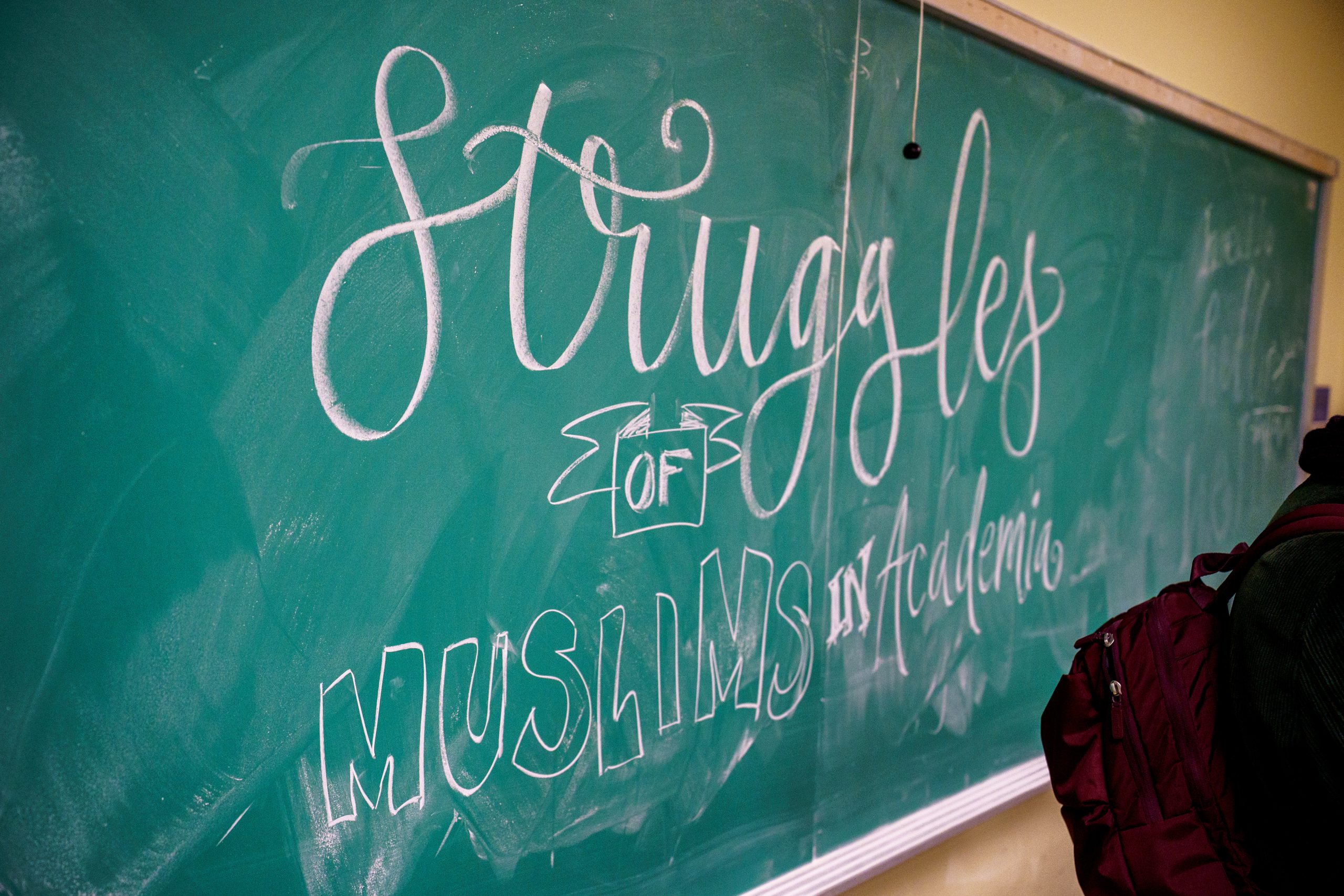
Returning to the global underrepresentation of Muslim academics, I felt a responsibility to respond. Academia, like any other field, depends on diversity. Diversity of thought, experience, and perspective. Without it, knowledge becomes narrow. In the summer of 2024, this realization moved from reflection to action, and Muslims in Academia transformed from an idea into a tangible organization.
Over the past year and a half, leading MIA has been one of the most fulfilling experiences (if not the most) of my life. The people I have met, the conversations we have shared, and the collective work we have undertaken have been deeply meaningful. As of January 2026, MIA has grown to six global chapters, supported by a team of over eighty individuals worldwide.
Like any organization, MIA continues to evolve. At present, our work at headquarters is focused on three main goals. First, expanding our chapter network across academic institutions globally. Second, building a strong academic community that encourages collaboration through mentorship programs, conferences, and shared initiatives. Third, engaging directly with our communities by visiting high schools and community events, and speaking with parents and families about academia and research as viable and meaningful paths.
Why do all this?
As I described a medieval world built on shared knowledge and cultural exchange, as familiar as this narrative may sound, it invites us to return to a fundamental question. What is the true purpose of the pursuit of knowledge? At its core, it is the desire to understand life and to improve it, on this earth and beyond it. In this sense, all of humanity is united in a single mission. Because of this, it is essential that people of all backgrounds are meaningfully represented in this pursuit. When representation is uneven, bias becomes unavoidable, and research itself loses much of its practical and human relevance.
Nation-states, after all, are a relatively recent development in human history, and societies have struggled in many ways to adapt to them. While political borders may shape governance, they need not define the limits of intellectual exchange. Moving forward, global relationships should be reconsidered and grounded once again in mutual exchange. Not relationships defined by dominance or one-way transmission of knowledge, but by reciprocity, collaboration, and a genuine effort to understand the unique challenges faced by different societies.
Humans are fundamentally alike, yet beautifully diverse in how we experience and interpret the world. There remains immense value in sharing knowledge across cultures and in learning from one another. Even within the constraints of borders, we can continue to cultivate understanding, cooperation, and appreciation, recognizing that intellectual growth has always thrived most where exchange, rather than isolation, is allowed to flourish.